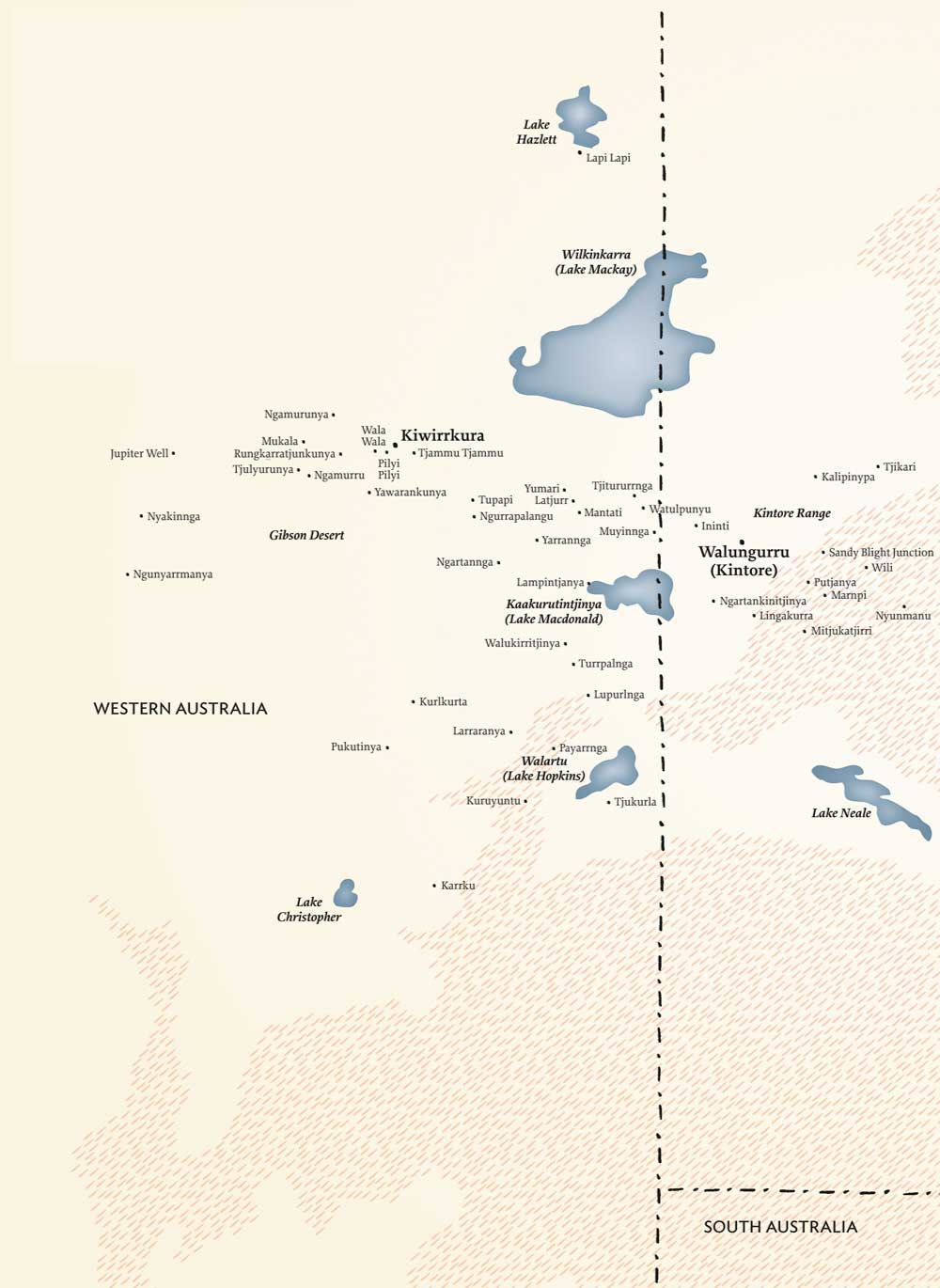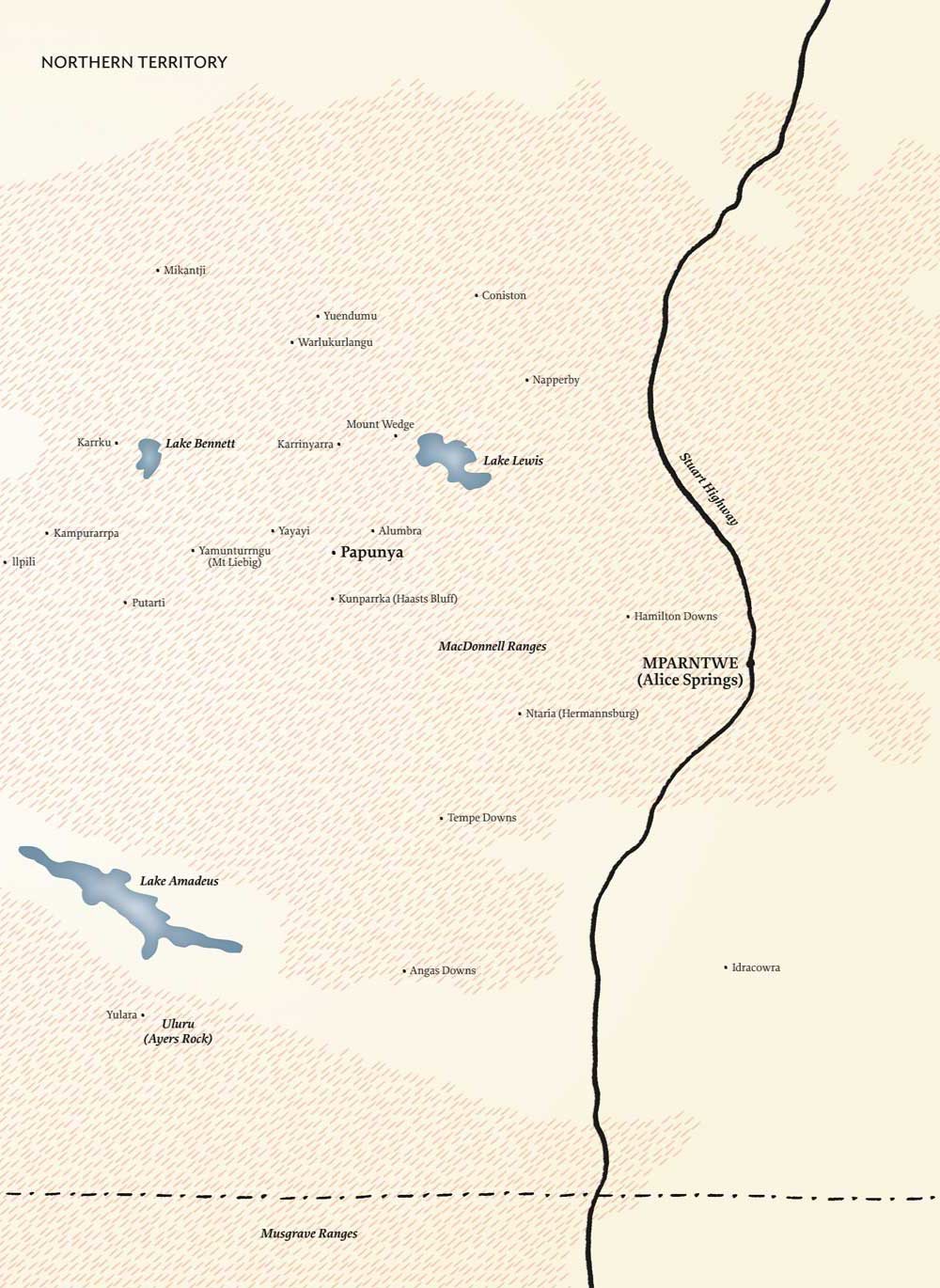



The inland deserts of Australia differ from other arid deserts around the world due to the huge variations in rainfall which allows groups of plants, unique to the Central and Western Deserts, to prosper. The Anmatyerr and Arandic landscapes of mulga flats and gibber plains are punctuated by the dramatic mountains of Karrinyarra and the Western MacDonell Ranges. Further west, the Pintupi terrain of rolling sand dune fields and spinifex hills are interrupted by the vast salt lakes of Wilkinkarra (Lake Mackay) and Kaakurutintjinya (Lake Macdonald).
During long periods of unrelenting drought, Aboriginal people across the desert have been sustained by their knowledge of the location of numerous water sources, including rock holes and soakage waters that are fed by underground springs. The landscapes of Central Australia and the Western Desert and the paths of its underground springs were shaped by the actions and events of ancestral beings during the creation period known as the Tjukurrpa (Dreaming).