Terms and Conditions
The artist, title and date of the work must be listed anywhere the image is reproduced:
Indian
Parsvanatha (19th century)
opaque watercolour on cloth
43.0 × 35.0 cm (image and sheet) 45.0 × 39.0 cm (stretcher)
National Gallery of Victoria, Melbourne
Gift of John McCarthy through the Australian Government's Cultural Gifts Program, 2011
Photo: National Gallery of Victoria, Melbourne
Where possible, the image must be reproduced in full (no cropping or over-printing). If you wish to use a detail of the work, a full reproduction of the work must also be reproduced elsewhere in the publication.
While the NGV believes this work to be in the Public Domain, it is the responsibility of the publisher to ensure that no further permissions are required for use.
For a complete list of terms and condition of use see the National Gallery of Victoria’s copyright policy.
Parsvanatha
(19th century)
Medium
opaque watercolour on cloth
Measurements
43.0 × 35.0 cm (image and sheet) 45.0 × 39.0 cm (stretcher)
Credit Line
National Gallery of Victoria, Melbourne
Gift of John McCarthy through the Australian Government's Cultural Gifts Program, 2011
Gallery location
Not on display
Artwork Details
Place/s of Execution
Gujarat, India
Inscription
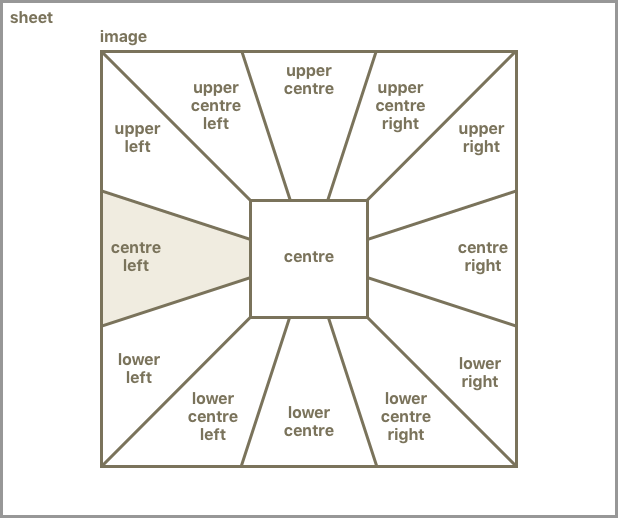
inscribed in ink (in Jaina Devanāgarī script) u.l.:
inscribed in ink (in Jaina Devanāgarī script) u.r.:
inscribed in ink (in Jaina Devanāgarī script) c.:
inscribed in ink (in Jaina Devanāgarī script) c.l.:
inscribed in ink (in Jaina Devanāgarī script) c.r.:
inscribed in ink (in Jaina Devanāgarī script) l.l.:
inscribed in ink (in Jaina Devanāgarī script) l.r.:




Accession Number
2011.317
Department
Asian Art
This digital record has been made available on NGV Collection Online through the generous support of The Gordon Darling Foundation
Physical description
The painting depicts Parsvanatha, the second last of the tirthankaras or Jinas, the founder teachers and enlightened beings who are the main figures in the Jain pantheon. Parsvanatha is regarded as an historical figure and is believed to have lived in the eighth century BCE. He is identified by his seven headed snake canopy and, because he is clothed and adorned, is associated with the Svetambara sect, one of two sects in Jain belief. Members of the ‘sky clad’ or Digambara sect eschew clothes and jewellery. Parsvanatha is seated in the lotus position on a throne, with a cosmic diagram superimposed on him. The combination of diagram and human body represents the attempt to ‘homologise the microcosm and the macrocosm’ (Pal 1994: 231). Other symmetrically placed areas of text surround the figure. The Jina is worshiped by two yakshi figures, each of which illustrates the Jain-style protruding eye.